Back & MSD strain
Patient transfer, repositioning and washing in a bent posture are leading causes of musculoskeletal disorders.
Smart support for care staff: Exia relieves patient transfer, mobilisation, washing, dressing and prolonged work in a bent posture — with a closed housing for maximum patient safety.
We'll get back to you within one business day with an initial assessment — no obligation.
In care, lifting, carrying and repositioning are part of daily life. That's exactly where absences, frustration and the costly loss of qualified staff arise.
Current care research shows: active exoskeletons like Exia relieve care staff reliably and flexibly. Conventional patient lifts often go unused — too cumbersome, too time-consuming. Fully automated care robots fail on acceptance and adaptability. Exia, by contrast, combines human empathy, adaptability and intelligence with robotic added power — developed on the basis of the latest findings from Charité care research.
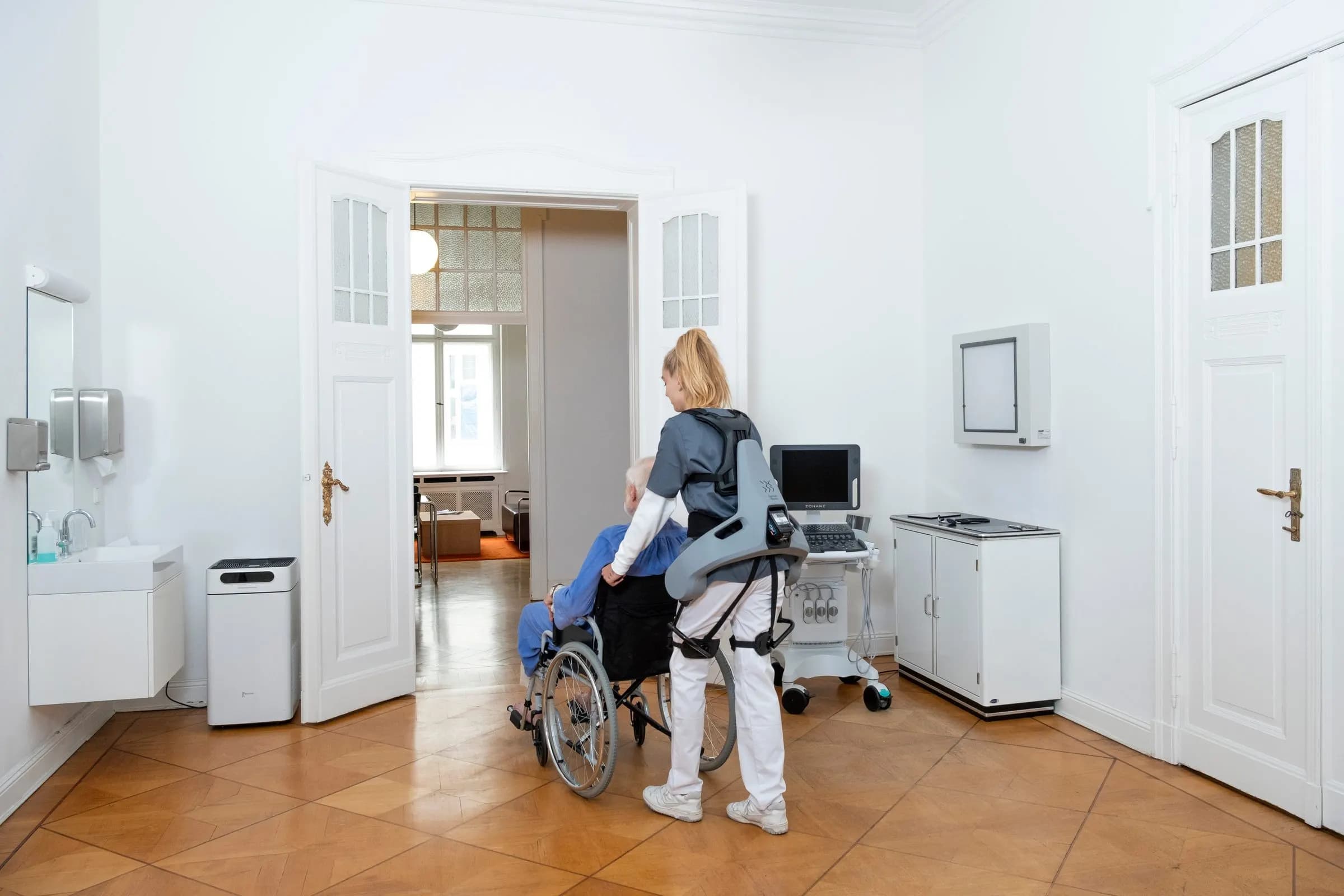
Active power support when lifting — relieves the lower back and protects against repeated overload.
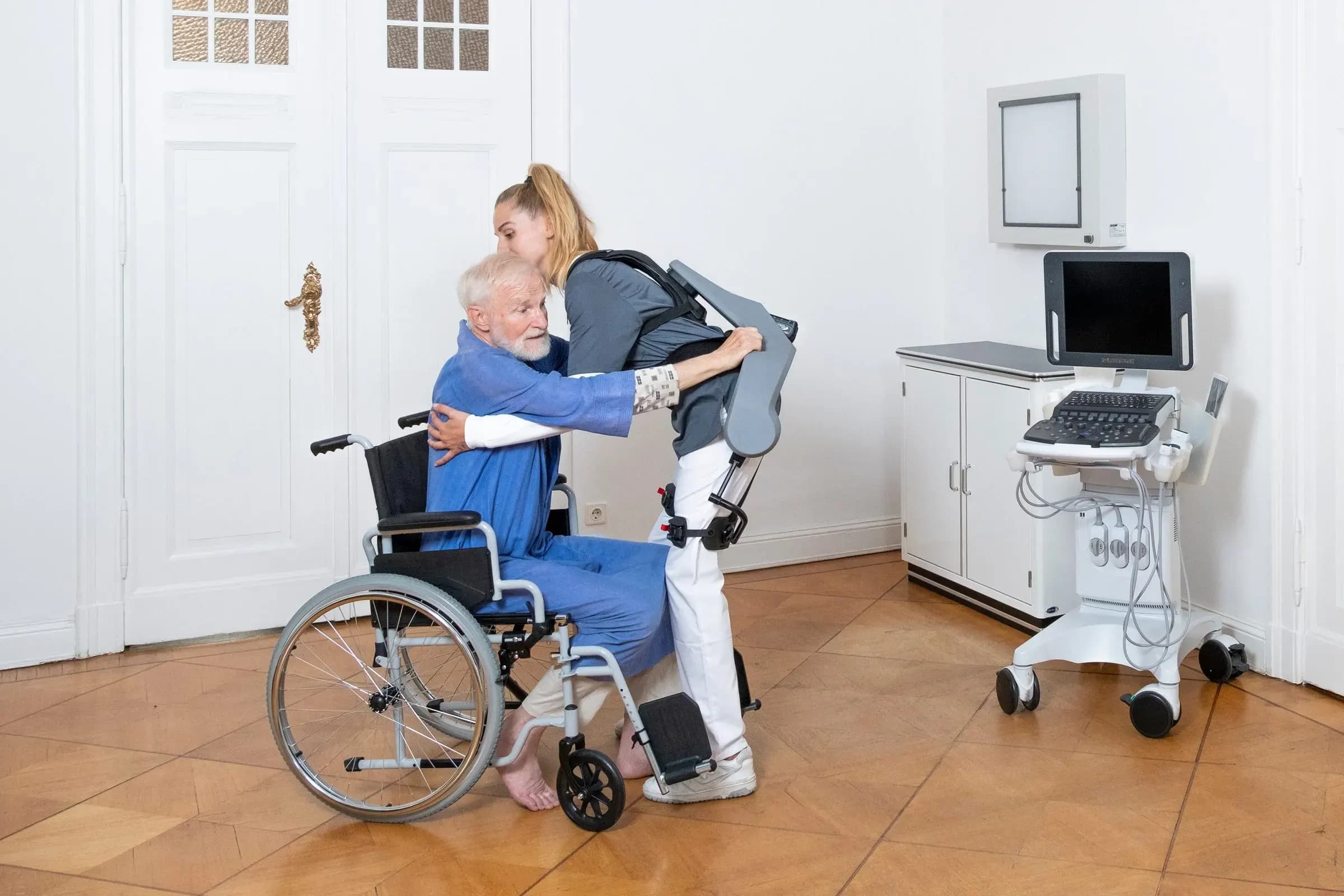
Transfer between bed, wheelchair, toilet or chair — safely and with significantly less physical strain.
Holding, positioning and supporting during examinations — even over long periods without fatigue.
More safety when sitting patients up and holding them — even with less mobile or unconscious patients.
Several times per shift without back injury: pressure-ulcer prevention, repositioning, mobilisation on the ward.
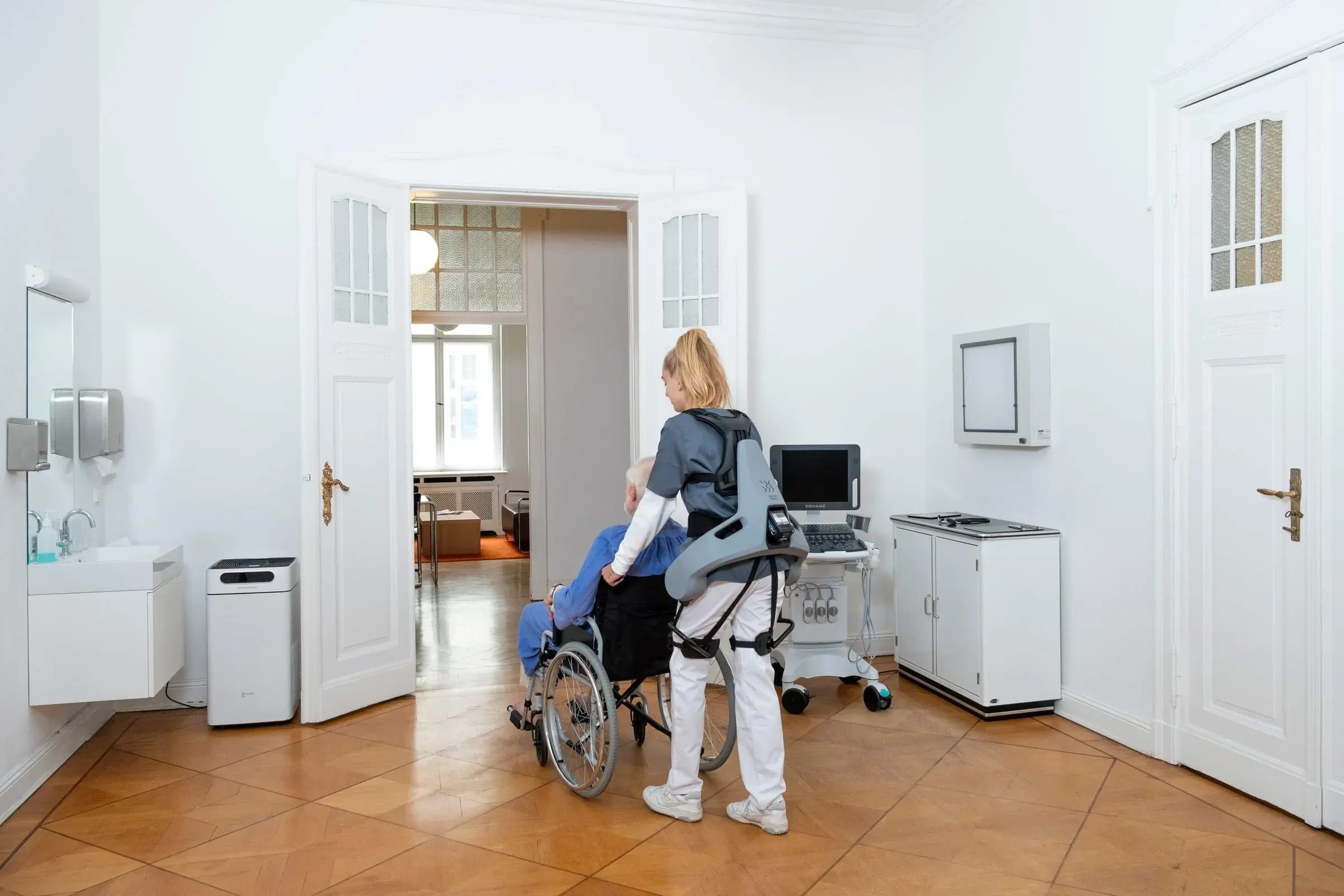
Prolonged work in a bent posture — during care, dressing changes, punctures — no longer strains the lower back.
Adds extra power and supports posture — reduces injuries and boosts productivity.
Prolonged work in a bent posture no longer strains the lower back.
Reduces fatigue with extra energy on every step.
Fully connected and designed around people: the exoskeletons' usage data feeds into advanced machine learning. That's how AI enables Exia to continuously adapt to people's individual needs, movements and tasks in real everyday work.
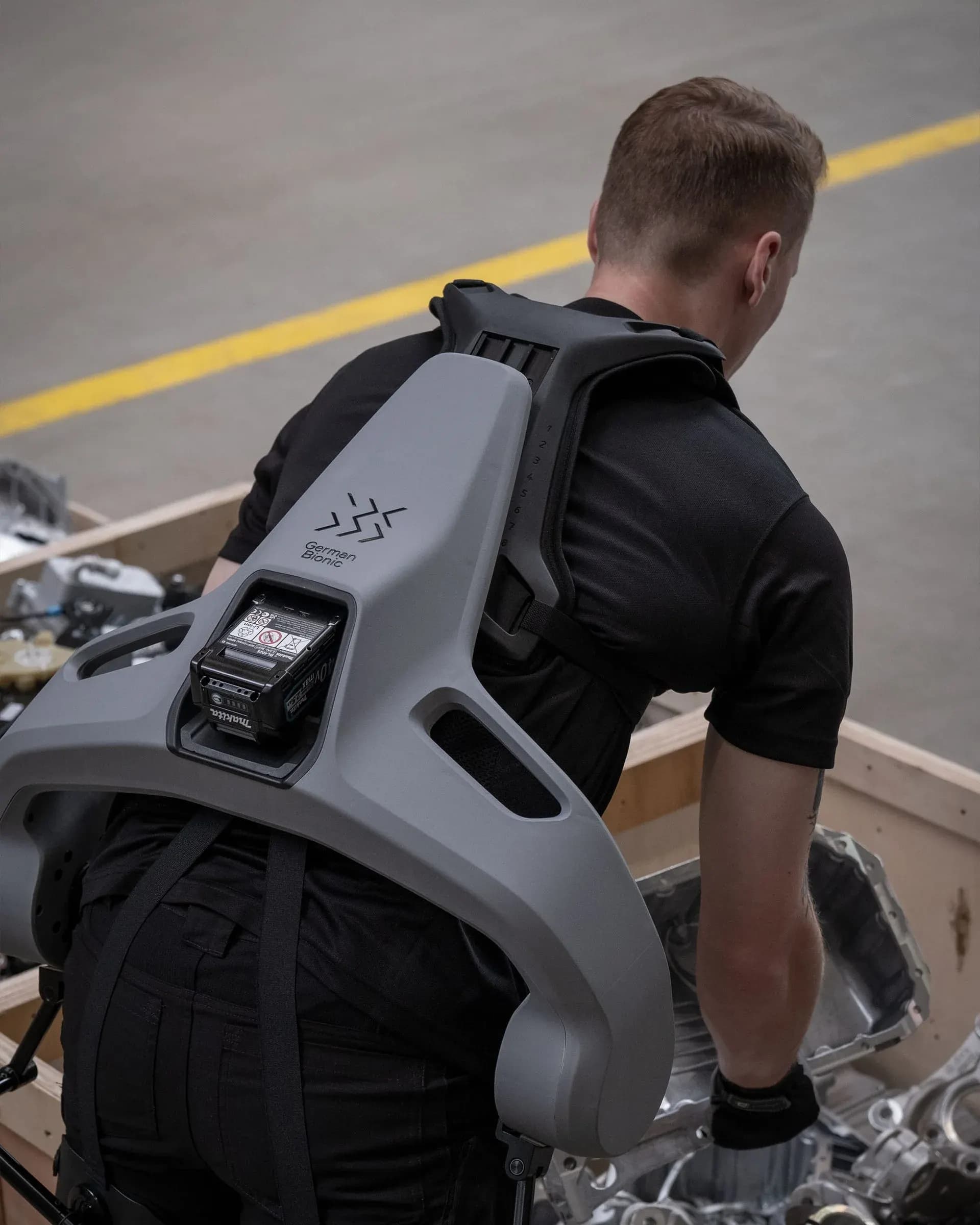
A unique seamless structure — no risk of pinching or crushing for patients, unlike exoskeletons with exposed mechanics.
An appealing design so patients feel at ease — Exia doesn't look like an industrial device at the bedside.
Secure, ergonomic handles right on the device — patients can actively support themselves.
Smooth, easy-to-clean surfaces prevent bacterial build-up — perfect for clinical hygiene standards.
Hassle-free daily start, clear operating logic — care staff are productive within minutes.
The world's first active exoskeleton with real AI power. Up to 38 kg of intuitive lift support — adapting in real time to person and task.
German Bionic is a partner to major healthcare institutions — including the AG Pflegeforschung of the Geriatrics Research Group at Charité — Universitätsmedizin Berlin. There, German Bionic exoskeletons have been a standard part of everyday clinical work for years. Insights from billions of real movement data points feed into real-time adaptation of the support — for every caregiver and every task.
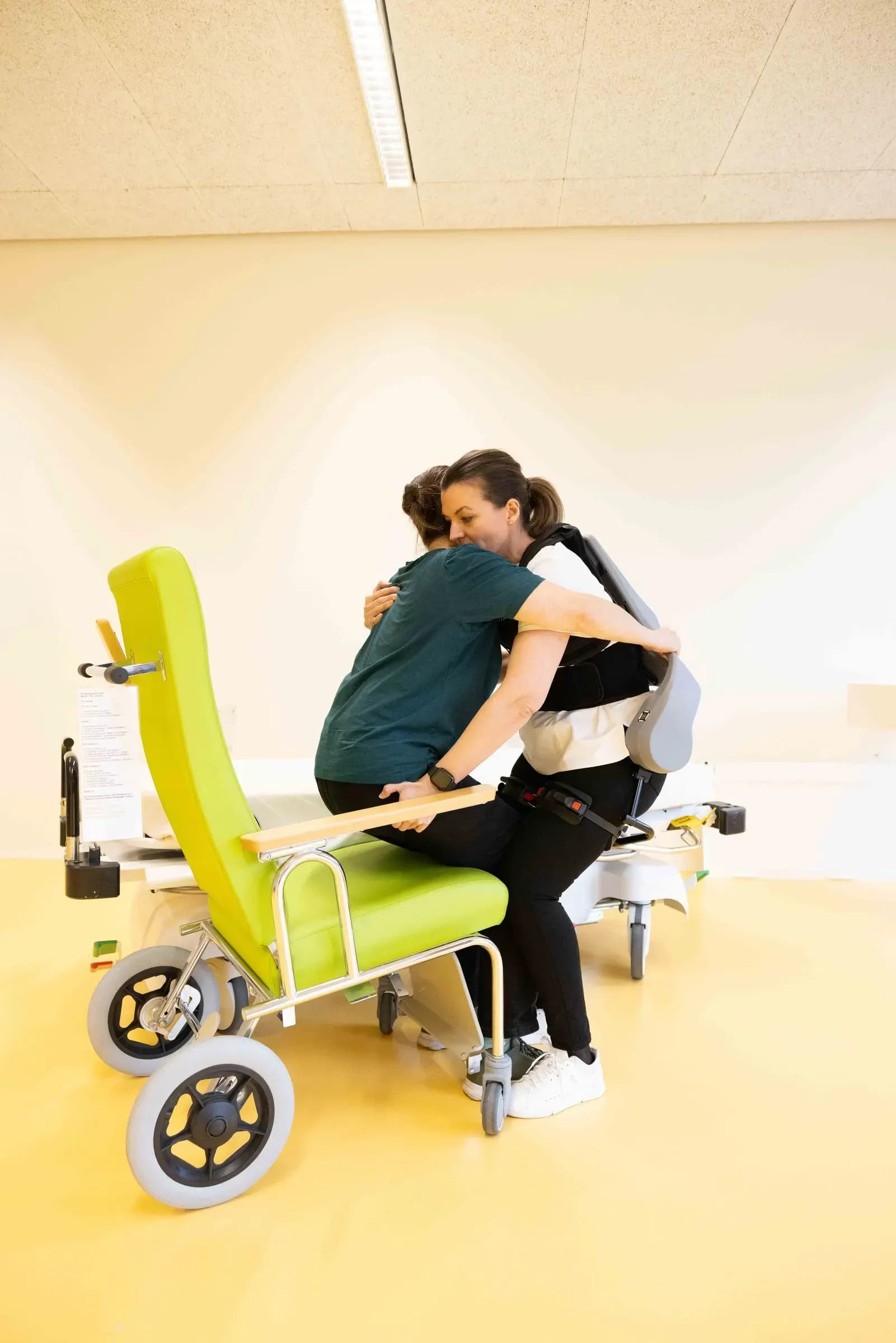

Exia in action
Direct purchase with clear TCO figures — for predictable capital investment from the asset budget.
Easy on liquidity: monthly instalments, predictable costs, device upgrade possible at any time.
Pay-per-use or monthly subscription incl. service, updates and battery swaps — no capex pressure.
From a pilot with 2 devices to a roll-out across the whole facility — we grow with your needs.
No lab demos. Exia runs on wards, in care homes and rehab facilities — in real shift operation.
“With the exoskeleton we have a tool that keeps the people who work in the hospital healthy — the younger ones too. It lets them handle tasks on their own that previously took two or three people.”
Briefly describe your ward, shift size and the most common physically demanding tasks — we'll get back to you with an initial expert assessment. No obligation, within one business day.
For physically demanding tasks like lifting, carrying, walking, loading and unloading, order picking and working in a bent posture. Exia supports several types of movement — not just one special case.
No. Exia can be used in logistics, intralogistics, production, construction, baggage handling and care. We'll work out together which tasks in your operation are suitable in the use-case check.
In the use-case check you receive, within 1–2 weeks, an expert assessment of which tasks and workplaces are best suited — before anything is installed on site.
Not necessarily. Exia integrates into existing processes — employees keep their familiar workflows. We'll clarify which adjustments make sense in your specific case during the use-case conversation.
What matters is the right areas of use, clear communication, wearing comfort and a gradual roll-out. We support the roll-out together with the works council and shift leadership.
Updates arrive over the air — employees benefit continuously from improvements without devices being taken out of operation. Hardware service follows a defined SLA.