Lifting all kinds of baggage
Repeated lifting of suitcases, special baggage and cargo items with widely varying weights — across the whole shift.
Exia supports employees in baggage handling, loading and unloading operations, at the catering trolley and in cargo handling — for less back strain, more stable shifts and better on-time performance.
We'll get back to you within one business day with an initial assessment — no obligation.
In ground handling, lifting, carrying and bent-over work in containers are part of every shift. That's exactly where absences, long turnarounds and the costly loss of trained crews arise.
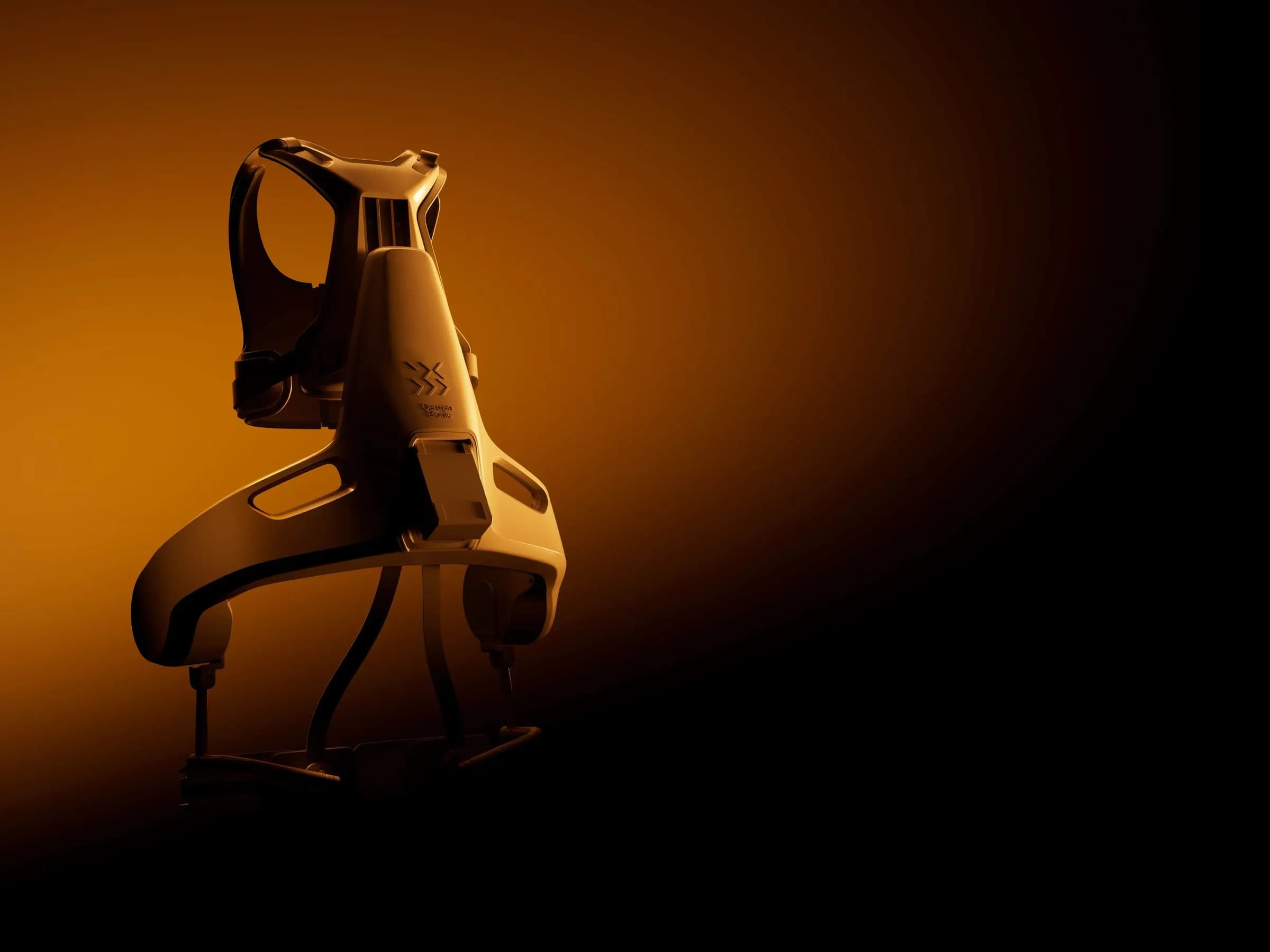
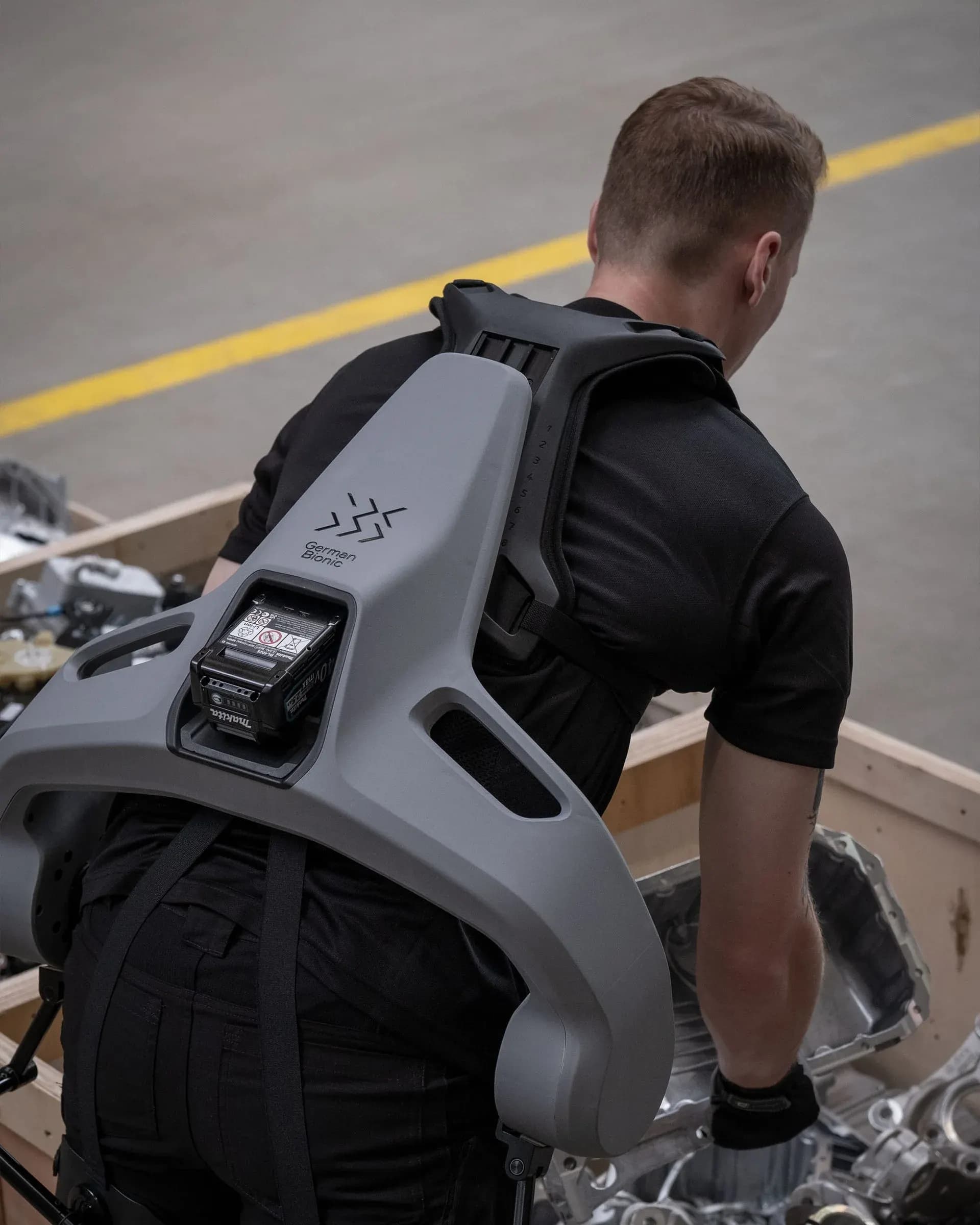
Exia is dust- and waterproof to IP54 and built for use on the apron and in the cargo hall. A closed housing, smooth surfaces and shared-device capability (one device per shift, individual vests per person) make Exia fit for 24/7 operations. Over-the-air updates and the German Bionic IO platform deliver movement and deployment data as the basis for health and safety reports.
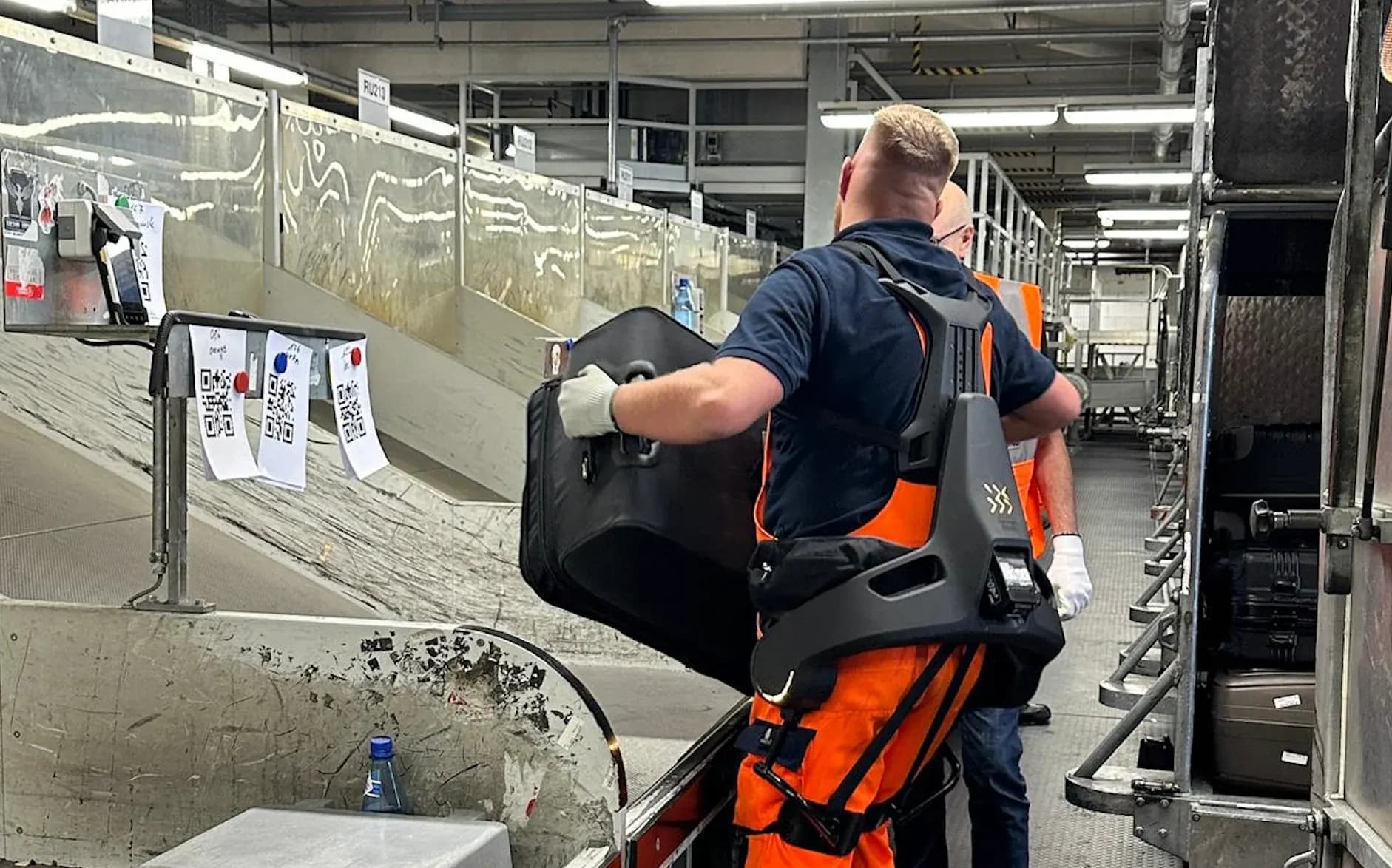
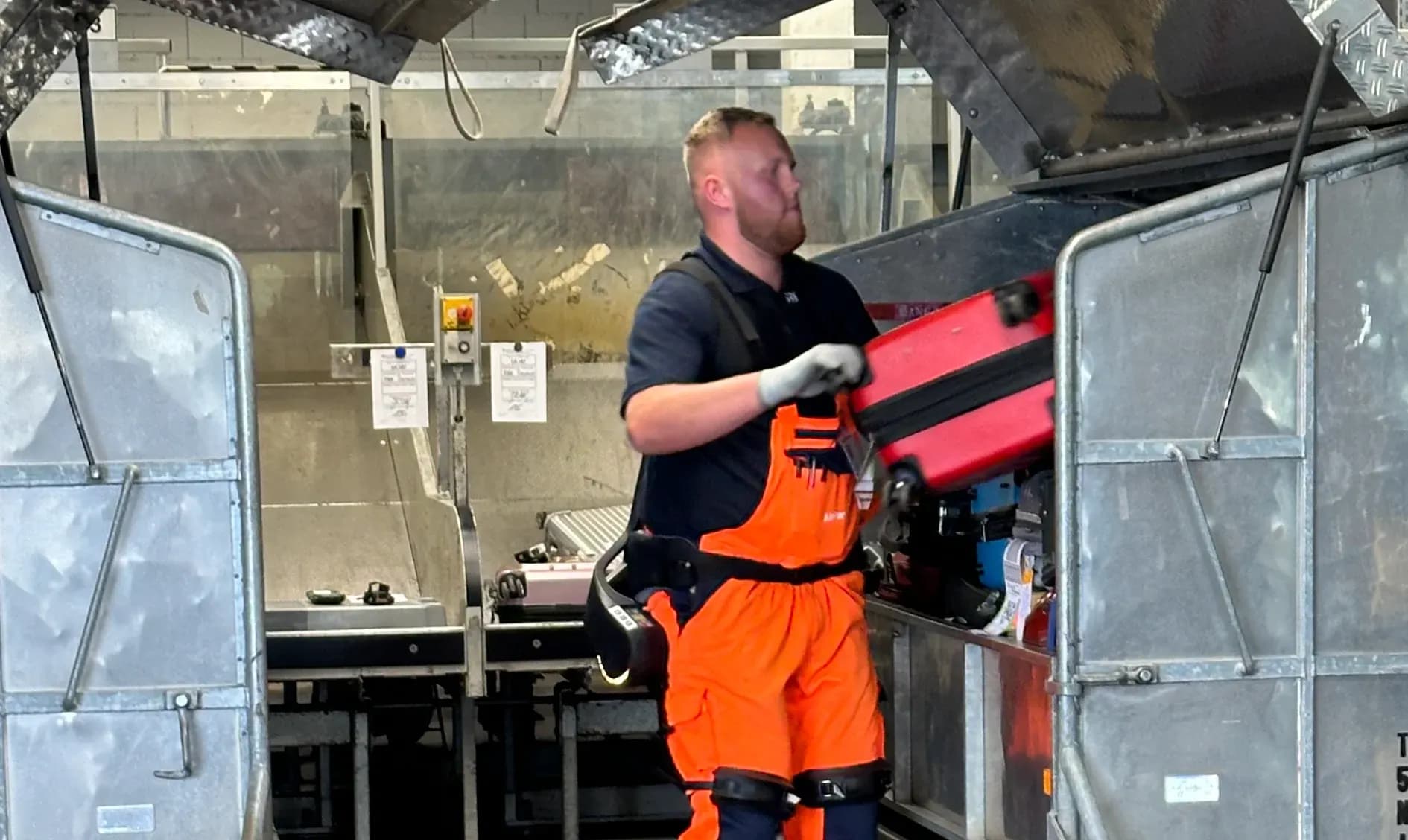
Lifting from containers and carts onto the belt — Exia adds active power to the lift and relieves the lower back.
ULD containers and lower-deck loose-loading: Exia also supports prolonged work in a bent posture.
Lifting and pushing heavy trolleys on board and back — with active lift and walking support.
Freight handling in the hall and at the aircraft — repeated lifting across the whole shift.
Switch between up to three modes (lift · hold · walk) as the task requires — even over long shifts in any weather.
The static-hold mode reduces lower-back strain during prolonged work in awkward postures.
Adds extra power and supports posture — reduces injuries and boosts productivity.
Prolonged work in a bent posture no longer strains the lower back.
Reduces fatigue with extra energy on every step.
Fully connected and designed around people: the exoskeletons' usage data feeds into advanced machine learning. That's how AI enables Exia to continuously adapt to people's individual needs, movements and tasks in real everyday work.

Exia in action
No lab demos. At Albrecht Dürer Airport Nuremberg, Exia has supported baggage handling in regular shift operation since March 2024 — after a successful test phase, with trained crews.
“I can adjust how much it helps me when lifting. The device supports up to 100 percent of my lifting and keeps my back straight.”
Briefly describe your station size, crew setup and the most common physically demanding tasks — we'll get back to you with an initial expert assessment. No obligation, within one business day.
For physically demanding tasks like lifting, carrying, walking, loading and unloading, order picking and working in a bent posture. Exia supports several types of movement — not just one special case.
No. Exia can be used in logistics, intralogistics, production, construction, baggage handling and care. We'll work out together which tasks in your operation are suitable in the use-case check.
In the use-case check you receive, within 1–2 weeks, an expert assessment of which tasks and workplaces are best suited — before anything is installed on site.
Not necessarily. Exia integrates into existing processes — employees keep their familiar workflows. We'll clarify which adjustments make sense in your specific case during the use-case conversation.
What matters is the right areas of use, clear communication, wearing comfort and a gradual roll-out. We support the roll-out together with the works council and shift leadership.
Updates arrive over the air — employees benefit continuously from improvements without devices being taken out of operation. Hardware service follows a defined SLA.